About

Overview and Acknowledgements

Made possible by the generous financial support of Sandra Pritchard Mather, the AAG Mather Climatology Knowledge Environment (CKE) is an online, interactive resource developed to honor John Russell Mather and his contributions to geography and climatology. 

AAG Mather CKE resources are accessible to climate researchers, students, educators, and geographers worldwide. 

This interactive research environment is modeled in part on the types of online knowledge environments developed by the American Association for the Advancement of Science (AAAS), for dynamic biological research fields. The Mather Climatology Knowledge Environment cross-links new and ongoing research in the field with classics and legacy materials, including those of Russ Mather. It also fosters interaction and discussion among researchers and students in climatology regarding work-in-progress, new programs and projects, events, evolving databases, and so forth.

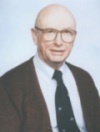
John Russel Mather

 A world renowned climatologist, ever-popular professor, mentor, and long-time chairman of the Department of Geography at the University of Delaware, Dr. Mather began his studies in meteorology at the Massachusetts Institute of Technology (MIT), earning a B.S. there in 1947 and an M.S. in 1948. He followed with a Ph.D. in Geography-Climatology from Johns Hopkins University in 1951. Mather was a long-time active member of the Association of American Geographers, serving the AAG in many capacities, including as AAG President (1991-1992). He received numerous awards and recognitions from the AAG for his scholarship and contributions to the discipline.

Mather joined the Johns Hopkins University Laboratory of Climatology in 1948, after completing his Master’s degree at MIT. He worked full-time at the Laboratory until 1961, when he began teaching part-time at the University of Delaware. In 1954, the Laboratory became affiliated with the Drexel Institute of Technology in Philadelphia, later becoming the C.W. Thornthwaite Associates Laboratory of Climatology. Mather’s work at the Laboratory focused on climactic water budget, especially its uses in practical situations.

In the early 1960s, Mather accepted a full-time position as Professor of Geography at the University of Delaware. In 1966, the University established a Geography Department and appointed Mather as its Chair. He would steer the department for the next 25 years, providing training and mentorship to several generations of the leading U.S. climatologists, in one of the country’s leading PhD-granting Programs in this field. During his distinguished career, Dr. Mather authored several books on applied climatology and water resources, numerous monographs, journal articles, book chapters and books. He was one of the editors on a co-edited U.S. - Soviet volume on global change titled, Global Change: Geographical Approaches, published by the University of Arizona Press in 1991. He received the AAG’s Lifetime Achievement award in 1998 and the American Geographical Society's Charles P. Daly Medal in 1999. He was Delaware's State Climatologist for many years.

Born in Boston, Massachusetts on 9 October 1923, son of Brigadier General John Mather and wife Mabelle, Dr. Mather was husband to the late Amy N. Mather, with whom he raised three children. A few years after the unexpected loss of his first wife (after 48 years of marriage), he married geographer Sandra Pritchard Mather, member of the Geology faculty at West Chester University. Dr. Mather enjoyed many interests including watching football and spending summers on Cape Cod. Dr. Mather died on Friday, 3 January 2003 at age 79.

Sources: John “Russ” Mather (Necrology). 2003. AAG Newsletter 38 (2): 20; “In Memoriam: John Russell Mather, 1923-2003” by Cort J. Wilmott, Sept. 2006, Annals of the Association of American Geographers, Vol. 96, No. 3, pp. 660-665.

Sandra Pritchard Mather

Sandra F. Pritchard Mather, second wife of John Russell Mather, earned a B.S. in Elementary Education (1964) and M.Ed. in Geography (1968) from West Chester State College. She received her Ph.D. in Geography from the University of Oregon in 1982. Before joining the Department of Geology and Astronomy at West Chester University in 1981 where she taught geology, meteorology, and geomorphology until her retirement in 1999, she taught second grade in the University’s Laboratory-Demonstration School. Sandie served as Chair of the Department from 1985 until 1990. The University awarded her professor emerita status in the fall of 2000.

Dr. Mather held numerous professional positions throughout her career. Among them were Executive Director of the Pennsylvania Geographical Society from 1992 until 2002; Recording Secretary of the National Council for Geographic Education from 1988 until 2003; member of the Pennsylvania State Social Studies Advisory Board from 1993 until 2002; and member of the Pennsylvania Geographic Alliance Steering Committee from the inception of the Alliance until 2002. The PGS presented her with their Distinguished Geographer (1993) and Distinguished Service (2003) awards. She received the President’s Medallion for Service from West Chester University in 2009 where she is a long-time member of the University Foundation’s Board of Trustees, presently serving as secretary.

The author of many articles, she is best known for her books about Summit County, Colorado, where her ongoing research focuses on the geographical, geological and historical landscapes from 1820 until 1920. Much in demand as lecturer and field trip leader, Sandie spends summers in Summit County leading hikes and tours and giving lectures on numerous facets of her research.
Dr. Mather has established a number of endowments over the years. Among others are a Graduate Fellowship Endowment in the Geography Department at the University of Oregon; a Visiting Scholars Lecture Series in the Geography Department at the University of Delaware; the John Russell Mather Paper of the Year Award in the Climate Specialty Group of the AAG; and the Cartographic Resource Center Endowment at West Chester University. The Center is named for both Russ and Sandie.

She looks forward to the full development of the Mather Knowledge Community and the role it will play in helping climatologists and others advance this very exciting field.